

Every project has a moment that never appears on drawings.
It is not the moment when construction is completed. Nor is it the moment when the client walks through the finished space for the first time. It happens much earlier — often before the first AutoCAD file is even opened — when the architect asks a single question What should this space say?
I am not referring to function. Nor to square footage or the relationship with the surroundings. I am referring to character — the quality that remains in a space even when there is no furniture, no lighting and no people inside it. What remains — or fails to remain — becomes the foundation for every decision that follows.
In my practice, this question has become the filter through which all other decisions pass. And the longer I work, the more convinced I become that the biggest mistakes in design are not made during material selection or construction phases. They happen much earlier – at the moment when that conversation with oneself or with the client is skipped entirely.
“The character of a space is not designed. It is recognized — and then protected from every decision that could erase it.”
What Does the “Character of a Space” Actually Mean?
When I use the word character, I do not use it metaphorically. I use it very precisely, in the same way a writer would describe a character in a novel.
The character of a space is the set of qualities that make it recognizable and coherent, even when details change. A space is never just an empty shell; it carries a personality. It determines whether it becomes a quiet refuge or an open stage for the outside world. These qualities do not appear by accident, , nor are they the result of temporary inspiration or trends. They emerge from a conscious decision about how we truly want to live within that space.
What constantly intrigues me in every project is whether the vision is genuinely clear or simply a vague idea. When the vision is unclear and every collaborator inserts fragments of their own interpretation, the result is usually a space that works on paper, but lacks soul. In the luxury interiors I work on,the obstacle is rarely the budget; More often, the problem is the loss of the original narrative — the underlying story that should connect every detail into a coherent whole.
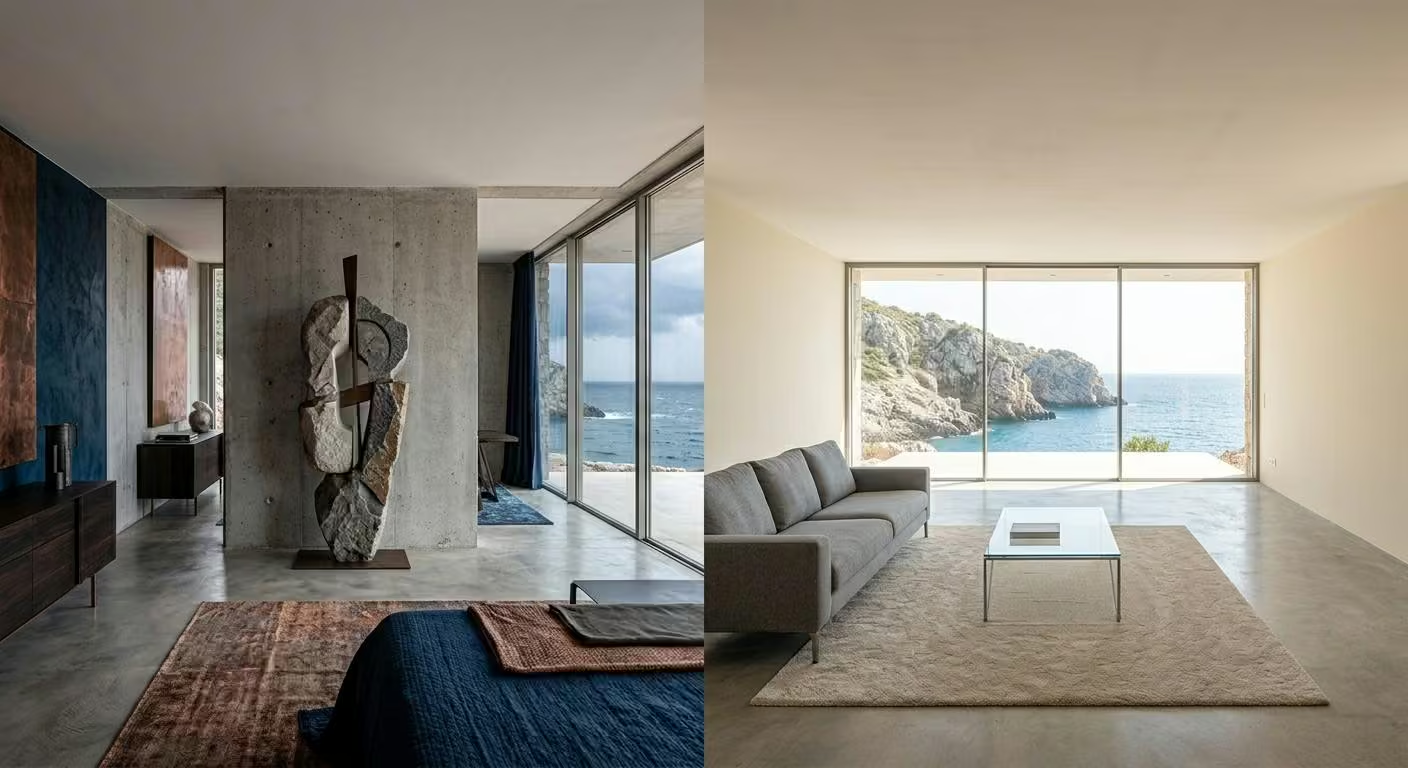
The Process That Comes Before Everything Else
For me, design does not begin with selecting lighting fixtures. It begins with questions that go far deeper than aesthetics. I often surprise clients by asking:“Who will you be five years from now?” Because spaces are not created for temporary impulses — they are created for the life that is yet to happen.
Once I understand whether someone seeks silence or dynamism, I receive a roadmapThose answers become my orientation points, telling me where to stop and where to continue. Sometimes the hardest part of my job — and also the greatest proof of a client’s trust — is consciously saying “no” to attractive trends. The character of a space is defined through the removal of excess.It takes courage to reject beautiful things that simply do not belong to the essence of who the client truly is.
“The greatest mistakes in design are not made during material selection. They are made the moment the question of character is ignored.”
When Character Determines Every Other Decision
Once the character of a space is defined with complete clarity, it begins to work for you. From that moment, the question is no longer: “Does this look beautiful?” but rather: “Does this serve the story of the space?” And that difference changes everything.
Imagine a space intended to feel calm and quiet. In that environment, every object that visually “shouts” becomes a problem — even if it is a remarkable piece on its own. On the other hand, in a space designed for gathering, presence and impression, excessive restraint can feel just as misplaced as visual overload.
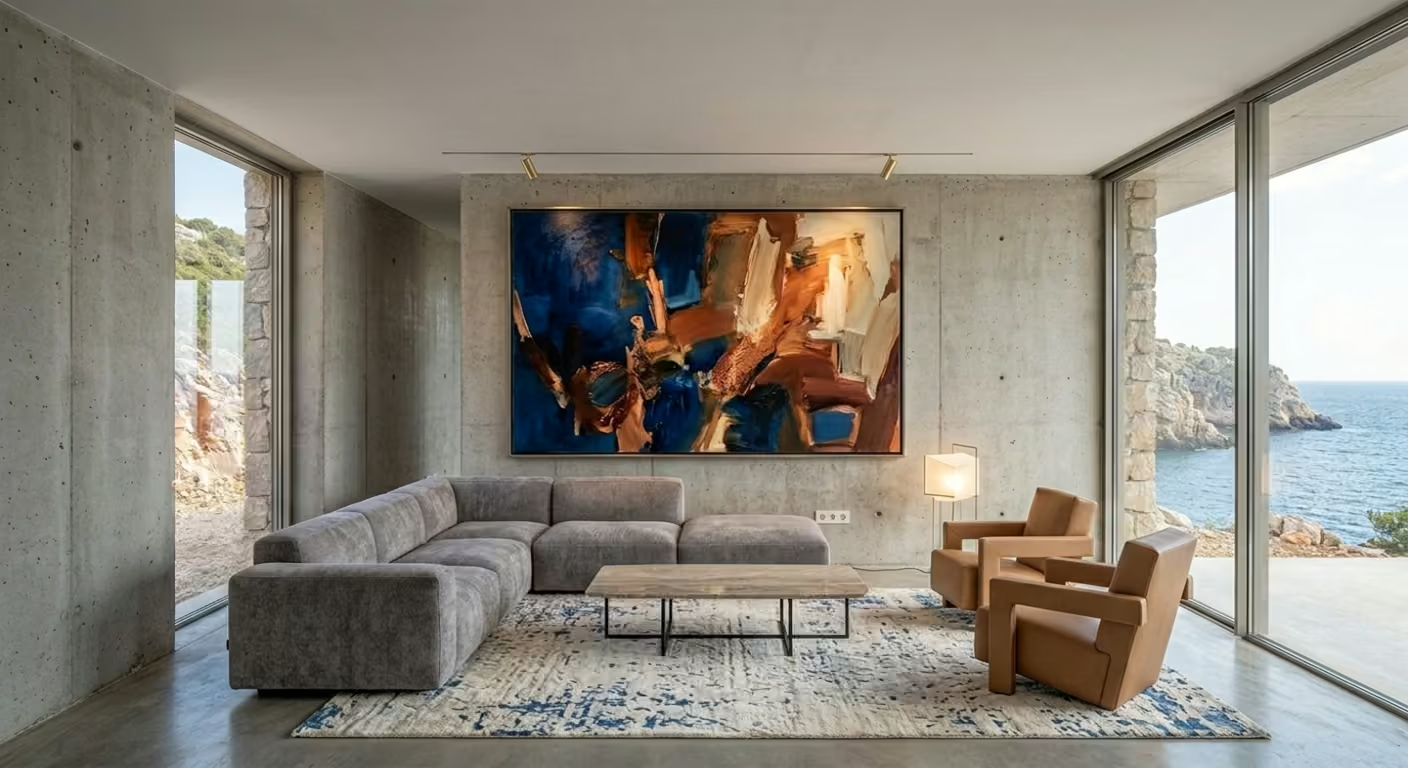
This becomes most evident when defining focal points – those elements that act as anchors of identity. Whether it is a sculpture, a lighting installation or a staircase, only one element can truly lead the composition. Everything else must organize itself around it.
One of the most common mistakes I see, both in private residences and corporate interiors, is that this decision is made too late — usually under pressure from deadlines or budgets. Instead of establishing that anchor first, it is often introduced at the end of the process. As a result, rather than allowing the space to naturally breathe around that element, the entire room is forced to adapt to something that was never truly planned from the beginning.
Character as Protection Against Trends
There is another reason why I insist so strongly on this phase — one that is rarely discussed openly in our profession: The character of a space is the only true protection against trends.
Today, interior trends change faster than ever. What was considered essential and contemporary only three years ago „only three years ago“ often already feels outdated. Yet spaces with a strong and clearly defined identity — spaces built around intention rather than temporary catalog aesthetics — do not age.
This is especially important for people building homes for themselves or creating long-term investments. A luxury villa that feels outdated after ten years is not merely an aesthetic failure; it is a clear sign that there was never a strong architectural vision behind it. And the market always recognizes that.
On the other hand, spaces whose character has been built patiently — through carefully selected details and the conscious elimination of excess — tend to gain something far more valuable over time: depth, dignity and timelessness..
What Comes Next
Everything I wrote about here — from searching for the soul of a space, to those introspective conversations, to defining the one central anchor — will soon be presented through a real project example.
It is a project particularly close to me, one we have recently completed. The project is a private villa on the Adriatic coast. In this case, the entire process was crystal clear from the very first conversation with the client all the way to the final detail. You will see how the decision surrounding a single element — a sculpture now placed at the very heart of the house — ultimately became a decision about the character of every square meter within that villa.
I look forward to sharing how this process translated into reality. See you soon.